If you have spent any time in a professional workshop, you know the feeling: a customer walks in with a check engine light, you plug in your entry-level scanner, and you get a generic code that points to a “communication error.” You aren't alone. In the early days, we could fix almost anything with a wrench and a multimeter. Today, you are troubleshooting a moving data center.
When we talk about vehicle control modules, we aren't talking about one single brain. We are talking about a decentralized network. Let’s strip away the buzzwords and look at what’s actually happening under the dashboard.
What Exactly is an ECU?
An ECU (Electronic Control Unit) is essentially a dedicated computer. It takes inputs from sensors, processes that data against a set of programmed parameters, and sends output signals to actuators (like fuel injectors, motors, or lights).
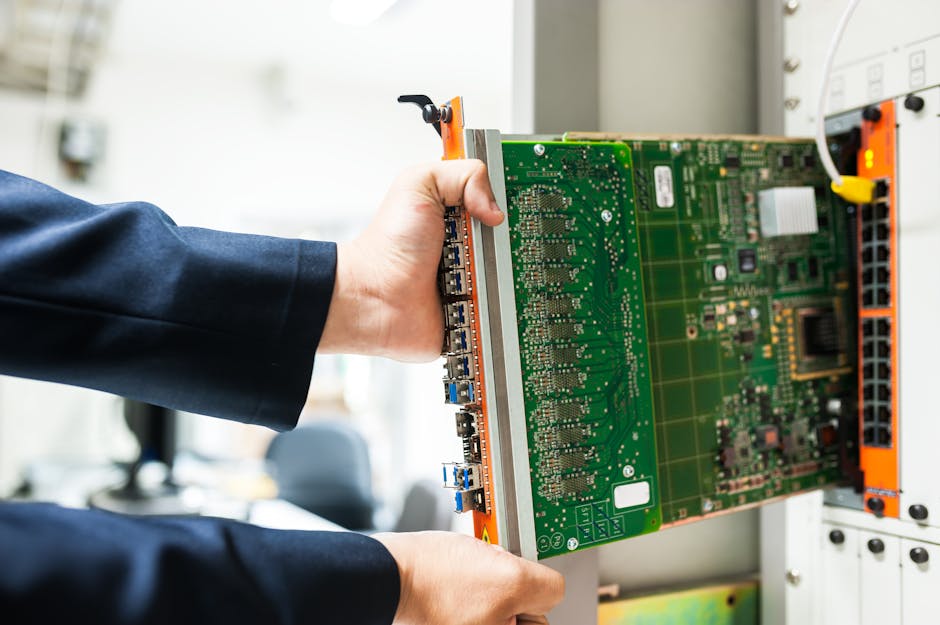
In the past, one ECU handled the engine. Today, you have multiple ECUs managing everything from the transmission to the heated seats. These modules talk to each other over a network called a CAN (Controller Area Network) bus. If you think Click here for more info of the car as a human body, the ECUs are the organs, and the network is the nervous system.
Industry data analysts like Focus2Move have pointed out that as vehicle complexity increases, so does the sheer volume of data being moved across these networks. It’s no longer enough to just read a fault code; you have to understand the traffic on the bus.
How Many Modules Are in a Modern Car?
The number depends heavily on the make, model, and trim level. A base-model economy car might have 15 to 20 modules. A high-end luxury vehicle loaded with ADAS (Advanced Driver Assistance Systems) can easily push past 100.
To help you visualize the architecture, here is a breakdown of common modules found in almost every modern platform:
Module Type Function PCM / ECM Powertrain / Engine Control Module TCM Transmission Control Module BCM Body Control Module (Lights, locks, windows) ABS / ESC Anti-lock Braking / Electronic Stability Control HVAC Heating, Ventilation, and Air Conditioning SRS Supplemental Restraint System (Airbags)
The Limits of Basic Scan Tools
You ever wonder why many independent shops start their journey with simple obd (on-board diagnostics) readers. These tools are great for reading emissions-related codes—the kind that trigger your check engine light. But here is the hard truth: they only see the tip of the iceberg.
If you are using a $50 handheld reader, you are essentially asking the car to read you its "greatest hits" list. You are missing the sub-codes, the live data streams from the body modules, and the ability to perform bi-directional tests (actually telling the module to trigger a component).
When you rely on cheap, generic tools, you find yourself guessing. You see a "communication fault" and assume a module is dead. In reality, it’s often a loose ground wire, a high-resistance CAN bus line, or a software update that was never performed. Tools like those integrated into the workflows managed by firms like Ancoca s.r.l. and data-driven platforms like MonkeyData remind us that without deep, accurate diagnostic data, you are just throwing parts at a problem.
Moving from OBD Readers to OEM-Level Diagnostics
If you want to move your shop into the next decade, you have to stop thinking about "replacing the part" and start thinking about "validating the network." You need OEM (Original Equipment Manufacturer)-level diagnostics.
Why make the jump? Because OEM tools allow you to do things your generic reader can't touch:
- Module Coding/Programming: When you replace a module, it often needs to be "introduced" to the vehicle’s VIN (Vehicle Identification Number) or configured for specific options. Bi-directional Control: You can command a cooling fan to turn on or a fuel pump to cycle, which proves whether the fault is the module or the component. Advanced Data PID (Parameter ID) Viewing: You can watch the actual voltages on the CAN bus to see if a signal is dropping out due to a frayed wire. ADAS Calibration: Safety systems require precise calibration after a windshield replacement or a suspension repair. Generic tools simply aren't built for this.
Checklist: What To Do When a "Module" Fails
Before you go condemning an expensive electronic control unit, follow this diagnostic checklist:
Check the Power and Ground: Never trust a "bad module" diagnosis until you have verified the input voltage and resistance to ground at the connector. Scan All Modules: A fault in the BCM can often cause a "ghost" code in the PCM. Clear all codes, drive the car, and see what returns first. Check for TSBs (Technical Service Bulletins): Before buying a part, check the manufacturer's portal. Sometimes a simple software reflash (updating the module's code) fixes the issue. Check Communication Lines: If multiple modules are "offline," you don't have multiple bad modules; you have a shorted network wire. Verify the Software Version: If you install a used module from a salvage yard, it must have compatible software versions or it won't communicate with the rest of the car.The Future of Diagnostics
The trend is clear: cars are becoming more reliant on complex electronic networks. We are seeing more integration of cloud-based diagnostics and over-the-air updates. As a shop owner, your greatest asset isn't your physical inventory—it's your ability to interpret the data coming https://dlf-ne.org/beyond-the-code-what-an-advanced-diagnostic-platform-actually-does-for-your-shop/ off these modules.

Don't be intimidated by the number of ECUs in a modern car. Learn the network architecture, invest in professional-grade diagnostic equipment that can communicate with all systems, and stop guessing. Test the signal, verify the network, and only then reach for the new part.
Remember, the goal isn't just to clear the light; it's to fix the car so it doesn't come back tomorrow. That is the difference between a parts changer and a professional technician.